Showing posts with label Self Bengos. Show all posts

Monday, October 7, 2013

Blog Update


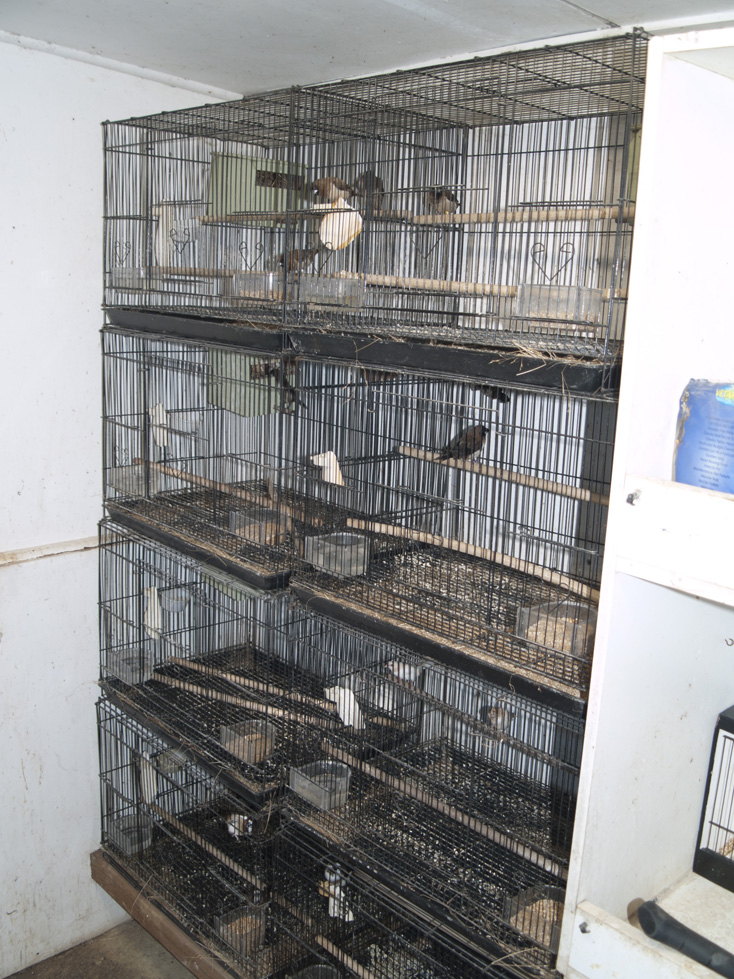
It is a busy year and unfortunately the Aussie Bengos Blog has suffered as far as updates. However I see that I receive plenty of hits on my Blog and again i thank you all for visiting me. Here are some images from my current set up. My passion for the Bengalese is strong and I have had some great results from some of my projects this year so i sincerely hope to update you on these.


Sunday, February 10, 2013

Articles in ABK

I have been fortunate enough to have two articles that I have written about Bengalese in the last two issues of Australian Bird Keeper for 2012.
Big thanks to ABK for giving me a chance and assisting in the promotion of the Bengalese finch in Australia.


http://www.birdkeeper.com.au/

Friday, November 30, 2012

New Benglalese Colour Chart.

JMC is the Bengalese and Lonchura Society in the Netherlands. The UK book "The Bengalese Finch" originates from this group.

www.jmc-lonchura


These read from left to right;

- Self Chocolate, Self Chestnut, Self Fawn, Black Grey

- Chestnut Grey, Red Grey, Dilute Self Chestnut, Dilute Self Fawn, Dilute Chestnut Grey

- Dilute Red Grey, Chestnut Clearwing, Fawn Clearwing, Chestnut Grey Clearwing, Red (Fawn[Admin]) Grey Clearwing

- Chocolate Pearl, Grey Pearl, Cremino, Grey Ino, Pink-Eyed White (Albino[Admin])

- Pied, Spotted White Headed, White Headed With Cap, White Headed With Eye Markings, Black-Eyed White

- Crested "Bonten", Frizzled With Breast Frills "Chiyoda", Frizzled With Neck Frills and Crest "Chunagon", Frizzled With Breast Frills Neck Frills and Crest "Dianagon"
 

For all Frilled Bengalese, the "Quotation" comments are the Japanese names as Japan is the origin of these particular Frills.

Thursday, August 23, 2012

Another Step Forward for the Self Bengalese

A few weeks back at a meeting at the Finch society of Australia, we had a guest speaker named Bob Barnes come through to speak about rare or extinct Finch and Softbill species Bob is well known in "Bird Circles" and equally respected. I was quite inspired by his words about Bird Keepers efforts to preserve Finch species (especially foreign) in Australia,  it resonated with me, and the concept properly hit home that when some birds in Australia are gone.....then they are gone. Aside from the various exotic species of finch Bob discussed birds like the African Silverbill, Rufus Backed Mannikin and The Javan Munia all of which are in decline in Australia.
Bob came across as very well spoken and I realized that we shared a few friends and he had actually seen my Self Bengalese at a friends place previously where I had some being held. After the meeting I bailed him up again because I could tell he was someone to talk sense with and I was learning a great deal from all of our conversation. It came up that I have this Blog and also get involved with the Aussie Finch Forum (which he frequents) and I was surprised and quite honestly very pleased that he was familiar with my effort to promote the Self Bengalese in Australia. What was most pleasing was that Bob continued to sincerely encourage me in my efforts since he personally agreed that the Self Bengalese is a poorly represented Finch in Australia.
Since this conversation we have spoken a few times and it was not long later that Bob was displaying interest in getting hold of some Self Chocolate Bengalese when they might come available. After this was raised a few times with me, one thing led to another and the concept of developing a breeding program together started to take shape. I have collected a few pairs of Selfs in the last 18 months and do not really have the facility to breed them all so Bob agreed to help and currently we have paired up some Selfs and also some of the Pied Dilute Bengos that I have so that we can develop the colours further.


It's a bloody exciting thing because now following a good season of breeding we will hopefully have a few birds to pick from and put on the show bench next year. Being a Canary and Zebra Finch Exhibitor also, I am learning a lot about showing birds through working with Bob on this and at least for now I have found a local Bird Breeder/Exhibitor that is passionate about the Self Bengalese. Regardless, his help is very much appreciated and it can only be good for our Aussie Self Bengo.

Monday, July 16, 2012

Moving Forward with Breeding

My posts have been a bit "light on" over the last few months so I have to catch you all up on some things that have been happening.
A good friend of mine has agreed to let me keep an Aviary at his property at Dural so that i can continue to breed and purchase stock for the future. So that is very exciting and at this stage the Aviary that I have bought is almost finished and in the mean time I am keeping my birds in one of his holding flights.  This is my aviary partially finished which is two 1.8m X 1.8m aviaries joined together.
So that is super exciting because now I can actually keep more than just a few birds and take the time to develop some good stock for next year when I will hopefully move into a house with my wife. Good Stuff.

So once that was settled I felt confident in approaching some of my Queensland friends about picking up some Bengalese from them. It was then decided that I would meet up with James and Tim at the Grafton Bird Show at the end of March.


This is the Grafton Hall where the Show was held


Numbers were reported to be half that of the previous years at the Show


Here is James keenly watching over his Bengalese being judged by Steve.


So it was excellent to catch up with Tim and also meet James for the first time. Tim had recently picked up some pairs of Dilute Gingers (Pastels) and he brought me down the birds that he did not want. James also brought me through a good number of his Chocolates and Chestnuts.


Out of James Bengos that he gave me, he gave me one of his show birds (above) straight off the bench on the day which was very nice of him.

Through James we visited a local Bengalese breeder in Grafton. It was very nice to meet Arthur and he had a good number of pied and Self Bengalese.

It was really great to discover another keen Bengalese breeder. Above is one of Arthur's holding flights. I picked up a pair of Chocolate Selfs from Arthur but unfortunately his birds were quite stressed from the drive back and one died the next day. It was a real shame because his Bengos are very good.
All in All it was an excellent weekend. 

So here is a picture of my happy family at Dural...


From the pictures above and below you can clearly see the difference in size when comparing a Sydney Show Pied and a Show Self Bengalese. They are not the best pics to describe Type but certainly show the larger size of head and general bulk and size of the Sydney Pied. You can see here how much work needs to be done to bring the Self Bengalese up to the same level.

Wednesday, April 11, 2012

Australian Bengalese Breeders Society


Well I am extremely happy to announce that a small group of ex members of the Bengalese Breeders Society (BBS) have bended together to start an Australian Bengalese Fanciers Club again. It is going to be primarily an online Club or Community to begin with so that we can formally gather our Australian Bengalese Finch fanciers together in a formal way and hopefully in time we can have a physical group also. To follow on from the origional club, the group is named The Australian Bengalese Breeders Society.


Please help support the club and join. You will find a few interactive elements including a forum where you can share ideas and learn from fellow bengalese breeders.

Here is the Link to the Page

Friday, February 24, 2012

Chocolate Self Bengo 2

I have come across one of the best photos that I have seen so far that depicts what an ideal Australian Self Chocolate would look like. These Bengalese in the picture are not Euros but the "Pure" type Bengo like we have in Oz. The bird on the left shows good bib scolloping on the chest and in particular excellent underbelly markings and this is the kind of thing that we should be striving for as a minimum in my opinion. If we the breeders of Benglaese in Australia can take the time to pair up our birds purposefully then we can hopefully raise the general standard of markings in our Bengos through selective breeding over time.

Tuesday, February 21, 2012

Pastel Discovered

I have been sent through some images from a member of the Aussie Finch Forum of a Pastel (or Dilute Ginger). Jason says that he bred this bird from a pair of Ginger Bengalese, which adds to the theory that the Pastel is recessive to all colours. The Gingers that reared this bird must have been split for Pastel to produce this one. I guess since these guys have been around in the past so the colour can still be present in birds split for it and show up randomly.
This Bengo from what my friend Tim tells me presents as a pied bird because of the white at the top of the bib (under the beak) and on the top of the head.


The image bellow confirms why the Pastel has been compared with the clearwing because the white on the body (wings and belly) is not showing pied but is normal for this dilution. I have read that this particular Pastel dilute factor can be selectively bred to develop a more solid coloured areas but preserve the white body like the Clearwings overseas.


A very nice Bengalese in my opinion and looks significantly different to the standard appearance of our Bengo in Australia which is something to preserve I think.

Cheers.

Wednesday, February 15, 2012

Silver (Dilute Chestnut) Self Bengalese

One of the more elusive colours today is the Silver or the Dilute Chestnut. As with the Pastel even 10 years ago it was a much less common Bengalese Finch in Australia and due to the decline in interest in the Selfs over the years since I am yet to see one or hear of anyone keeping them.
As the name suggests the colour is a Chestnut with a dilute factor but in particular the Bengalese that goes by the name Silver has a distinctive look of a smokey cream looking colour with a darkening to tan at the face.


Friday, February 10, 2012

Dark Eyed White Self

I've been meaning to write about the White Self for a while now and have finally gotten around to it. My attached pictures are of Australian Bengalese and were supplied by my friend James in Queensland.

I will begin with the dark eyed White which can be described as a pied Bengalese with one big white patch that covers the whole body. These White Selfs have their natural non pied colour still present in their DNA and is simply concealed by the pied marking that covers it. This kind of White has dark eyes which helps you to think of it as a fully pied bird,  the colour of the eye will help to show what the natural colour of the bird is underneath. The White Bengalese has both dominant and recessive pied factors present and it is best practice to breed a white to a light pied (lightly variegated) for best results. It has been said that breeding a full white to another full white can increase the likeliness of blindness in the future. When showing these finches, other than size and type that are a standard consideration, the White Self birds can sometimes have poor feather coverage at the bend of the wing and at the ear. One or both points are noticeable on the pictures in this post. This feature also gets worse as fully white birds are mated together, so to overcome this feature then they should be paired with lightly variegated birds that have good feather coverage in these areas.
The Dark Eyed White Self Bengalese is probably the most known Self in Australia and through my inquiries unfortunately tends to have more value to some bird dealers that I have spoken with when compared to a Self Coloured Bengalese such as the Chocolate or Chestnut. In truth, it is probably just as hard if not harder to produce a Coloured Self Bengalese than the Dark Eyed White due to the dominant nature of the white or pied factor, and in coloured birds this white factor is very difficult to remove.

Other Australian Bengalese that can be called White Selfs are the Albino and also the Cremino, both have red eyes.

Cheers.

Tuesday, February 7, 2012

New Selfs

A few weekends ago I picked up some new Selfs from my friend Bruce and they are very nice. Bruces bloodline of Selfs dates back to the 60's when they were more common. Thankfully he still has an attraction to breeding and showing these lovely birds and is one of the few that do. I have had my Queensland Selfs since September and have been patiently waiting to pick up some of Bruce's excess finches since then. Bruce has Gingers and Chocolates and does not have any Chestnut Mutation in his finches bloodline to my knowledge.

These Selfs are very nice and have quite stocky bodies and good head size.


I'm happy to have some more Selfs now. 
In my small aviary it is starting to get a bit cramped. I am going to move into a house in the next year and I am looking forward to having some decent sized aviaries and even a bird room, so looking forward I am going to try and develop some more stock and I am going to move my current collection of Aussie Bengos to my families aviary. That way I can still pick up a few more Selfs as I find them and will have a decent starting point of stock numbers when I move into more space.

Cheers

Thursday, February 2, 2012

Pastel (Dilute Ginger) Self Bengalese

Last weekend my friend Tim sent me an article from a magazine that he found from 2002 that was written about the Bengalese Breeders Society in Qld by Mark Shipway you can download the article in my Download Library HERE. It is an excellent article that helps to paint the picture of the group's ideals in regards to the Aussie Bengo. Tim and James have often spoken about a colour called the Pastel and the colour is described in the BBS Colour Standard, this is a colour that I have been told about previously but have never been able to see an example. Because the Mutation is described in a similar way to the Clearwing I have to admit I have possibly gone off on the wrong tangent. I say this because there is a brief description and picture of this mutation in this great article. It is a beauty, I'm quite impressed as to how striking the Finch is. Since 2002 Self Bengalese and their breeders have been in decline as with this colour. As with the Silver (Dilute Chestnut) I have not heard of any being in anyones collections, however Tim has recently told be that he knows a breeder in Qld that has some pied Pastels so there may be hope for this Mutation yet.


This is the Australian Pastel pictured in the article on the Left.


An intersting thing that I have noticed about this particular picture of the Australian Pastel is that where on the darker Bengos like the Chocolate Chestnut and even the Ginger the traditional feather markings of the Bengalese breast scolloping is a primarily dark feather (the same colour as the head), and a lighter accented rim or outer edge, see below;

Chocolate


Chestnut


Ginger


Where as this Australian Pastel appears to have a kind of inverted appearance to these where the main colour of the breast feather is lighter than the darker rim;

Pastel


In the above mentioned BBS article Mark Shipway makes some comments about this Mutation;


You can see from his comments that Mark believed that this particular mutation was independant to the standard Ginger and its dilute factor.


Here are some examples below of Bengalese from Over Seas that look a lot like the Australian one but I still think that the scolloping of these birds have a more traditional look rather than the inverted look of this Australian Pastel above.


I'm quite excited to see this Australian Mutation the Pastel fully now and look forward to seeing one in the future.

Cheers


Thursday, January 12, 2012

Champion Bengo

One of my friends from the NSW Finch Exhibitors Society, Steve has sent me through a few pictures of Bengalese Finches and this one here is a picture of a Bengalese Champion at a Qld Birds Show last year. He certainly is a nice example of a well shaped finch (has good Type) and has good markings also.


Monday, January 9, 2012

Local Selfs


One of the three breeders of Self Bengalese that I am in touch with is Bruce and he lives a good drive out of Sydney. He is a member of the NSW Finch Exhibitors Society that I have just become a member of and I have visited with him once before and speak often on the phone. He has just finished off his breeding season and has sent me a couple of pics of his Self Bengalese. These pictures are a bit more clear than the earlier ones that I have posted and shows well how nicely sized these Show Quality Self's are. Bruce keeps Chocolates and Gingers.


Bruce tells me that he first picked up his Self Bengalese when he was younger in the 1960's and Bruce goes as far to say that in those days in Sydney, Selfs were more popular than the pied and would win more pizes on the show bench. It is safe to say that Bruce's Bengos are still descendants of this early Sydney bloodline.


Chocolate Markings


One of my friends in Queensland (Australia) James, that my Selfs originally came from has been breeding Bengalese since he was young and over the last 10 years or so he has been selectively breeding his Chocolates for darker birds with more defined underbelly markings.


I am very impressed because it seems that James has been able to achieve some significantly dark underbelly markings without relying on Hybridization to make it possible (as with the Euro Self) but rather through patience and selective breeding. It is hard to see the exact detail of these markings but they do look very impressive that's for sure


I have been speaking with James lately and I hope to get hold of some of his nicely marked Bengos in the future.